For fifteen years, the playbook for a small software company, agency, or independent developer blog was simple: find a long-tail informational keyword ("what is WebRTC signaling," "React vs Next.js," "how to structure a PostgreSQL schema"), write a clear 1,500-word explainer, rank in the top three, and collect steady organic traffic. In 2026, that playbook is upside down. Your page can still rank at position one in Google Search Console — impressions flat or even climbing — while actual clicks to your site fall by more than half.
Here is what the 2025–2026 search data actually shows on Google AI Overviews, AI referral traffic, and llms.txt — and what small sites, developer portfolios, and boutique SaaS products should ship instead of another generic tutorial.
The 2026 Numbers: Impressions Up, Clicks Down 58%
Multiple large-scale telemetry studies published across late 2025 and early 2026 converged on the same structural shift in informational search:
| Study / Source | Dataset scope | Key finding |
|---|---|---|
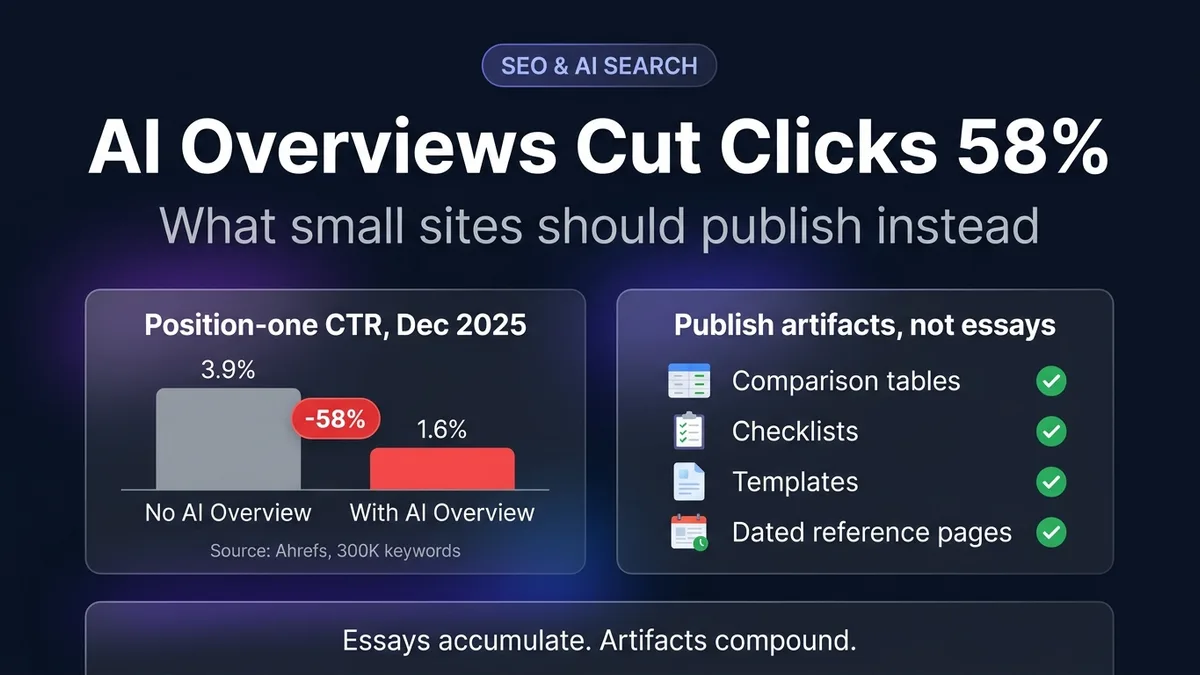
| Ahrefs (Dec 2025 – Q1 2026) | 300,000 informational & commercial keywords | Position-one organic CTR averaged 3.9% without an AI Overview vs. 1.6% when an AI Overview appeared — a 58% drop. |
| Seer Interactive (2025–2026) | Cross-client GSC + paid search cohort | Organic CTR on queries triggering AI Overviews fell by roughly 61% year-over-year, even when rankings held steady in positions 1–3. |
| Similarweb (Global Web Index, 2026) | Top 1,000 news & informational domains | Zero-click searches rose above 65% on informational queries; AI chatbot referrals grew rapidly in percentage terms but replaced less than 1% to 2% of lost search clicks for most publishers. |
Notice the mechanism. Google did not de-index those pages. In fact, being cited inside the AI Overview counts as a high-ranking impression in Google Search Console, which is why so many site owners see the classic "crocodile jaw" chart in GSC: the purple impressions line tilts up while the blue clicks line tilts down. When a searcher asks a question that can be answered in six bullet points ("what is the difference between SSR and CSR"), the synthesized answer at the top of the SERP satisfies the query on the spot.
What About llms.txt, Schema, and "Answer Engine Optimization"?
As organic click-through rates dropped, a wave of "AEO" and "GEO" advice promised that adding an /llms.txt file or sprinkling extra schema markup would make ChatGPT, Perplexity, and Claude send floods of high-intent traffic. It helps to separate good technical hygiene from wishful thinking:
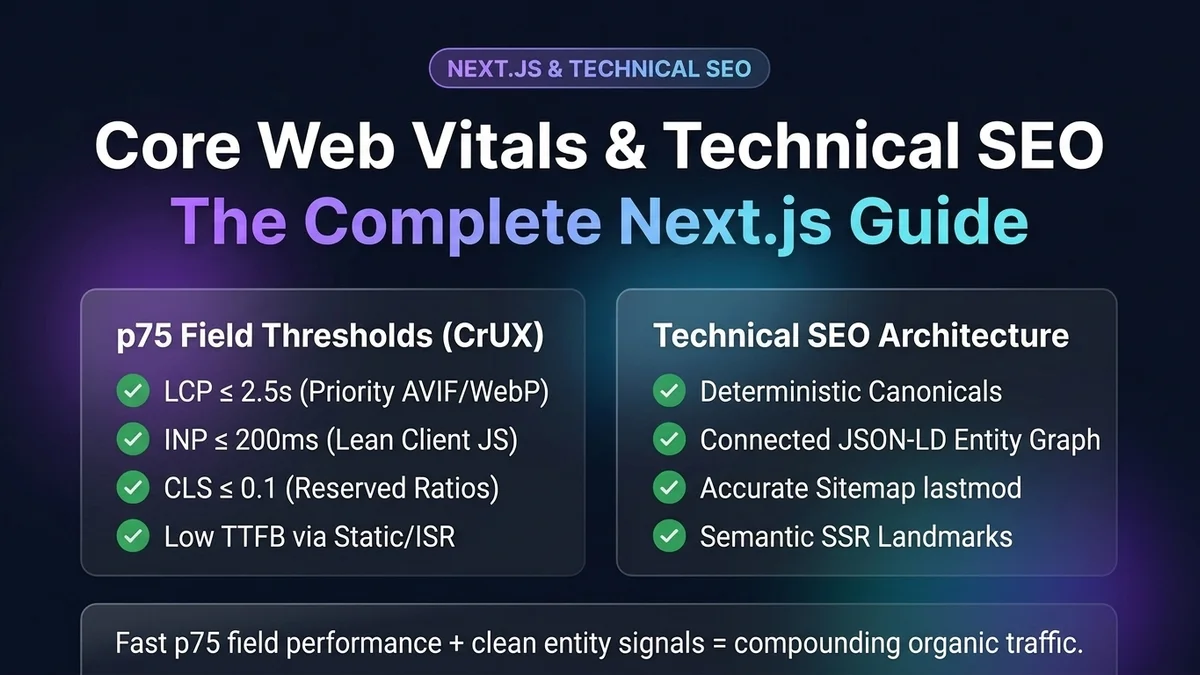
llms.txtis documentation hygiene, not a ranking lever. I serve a clean/llms.txtfile on this site (and cover how it fits alongsidesitemap.xmlandrobots.txtin my Core Web Vitals & Technical SEO for Next.js guide) because it costs twenty lines of Markdown and gives LLM retrieval agents a concise map of who I am and what software I have shipped. However, log-file studies across sites that adoptedllms.txtshow that model crawlers (GPTBot,ClaudeBot,PerplexityBot) still discover and rank pages primarily through standard HTML links, sitemaps, and search indexes. Treatingllms.txtas a growth strategy while publishing generic content does nothing.- Structured data (
Person,SoftwareApplication,BlogPosting,FAQPage) clarifies entities; it does not rescue commodity prose. Clean JSON-LD helps search engines and AI systems connect an author entity to live software products without ambiguity. Keep your schema accurate and aligned with visible page content — just recognize that structured data makes original work easier to cite, rather than making commodity summaries worth clicking.
Why Publishing More Generic Articles Makes It Worse
When traffic dips, the reflex is to increase publishing velocity: two posts a week instead of two a month, often drafted with an LLM. For a small site, that makes the problem worse in three ways:
- Zero information gain:If an article can be written by prompting a model with no proprietary code, no benchmark table, and no production telemetry, then Google's AI Overview can synthesize the exact same answer without sending the user to your domain.
- Crawl and authority dilution: Fifty thin explainer articles dilute internal link equity away from the pages that actually convert clients — your live product case studies, interactive tools, and service pages.
- Trust erosion with technical buyers:Founders, CTOs, and engineering managers can spot generic AI-generated filler in three seconds. One shallow "Top 10 React Hooks in 2026" post actively damages the credibility of a senior engineer's portfolio.
What Small Sites Should Publish Instead: Artifacts Over Essays
An AI Overview can summarize an explanation, but it cannot execute a workflow, run a live scanner against a user's URL, transfer a file over WebRTC, or replicate first-hand production architecture notes. Every piece of content on a small site in 2026 should fall into one of four categories:
1. Free Interactive Tools and Utilities
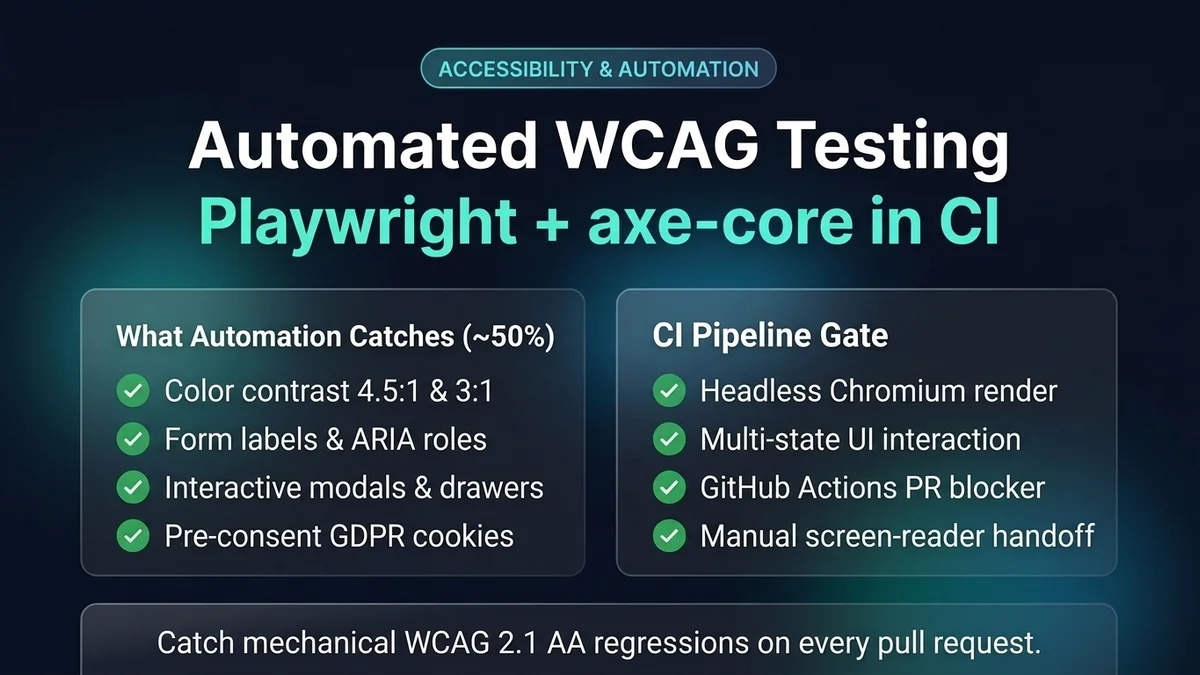
A user cannot run a headless Chromium accessibility audit inside a Google AI Overview. Look at the difference in user intent between an article titled "What is WCAG 2.1" and a live scanner like AuditBloc that runs Playwright + axe-core + GDPR cookie inspection against a real URL, or a zero-signup browser utility like Relay for peer-to-peer WebRTC file transfers, or YouTube Video & Audio Downloader. Tools earn bookmarks, direct repeat visits, organic backlinks, and high-intent clicks that no SERP summary can intercept.
2. Production Architecture Case Studies With Real Constraints
Instead of writing "React vs Next.js," write the engineering post-mortem of a real system you put into production — with the exact schema trade-offs, failure modes, and lines of code that broke under load:
- How Tillqorin POS handles atomic multi-table retail checkouts, 80mm thermal receipt CSS, and barcode-scanner keyboard loops (read the Tillqorin POS case study).
- How Relay streams multi-hundred-megabyte files browser-to-browser over DTLS-encrypted WebRTC data channels using
bufferedAmountLowThresholdbackpressure (read the WebRTC P2P file transfer case study). - How Taylance CRM structures multi-workspace B2B lead pipelines, role-based access, and revenue analytics.
3. Dated Regulatory, Specification, and Benchmark Reference Pages
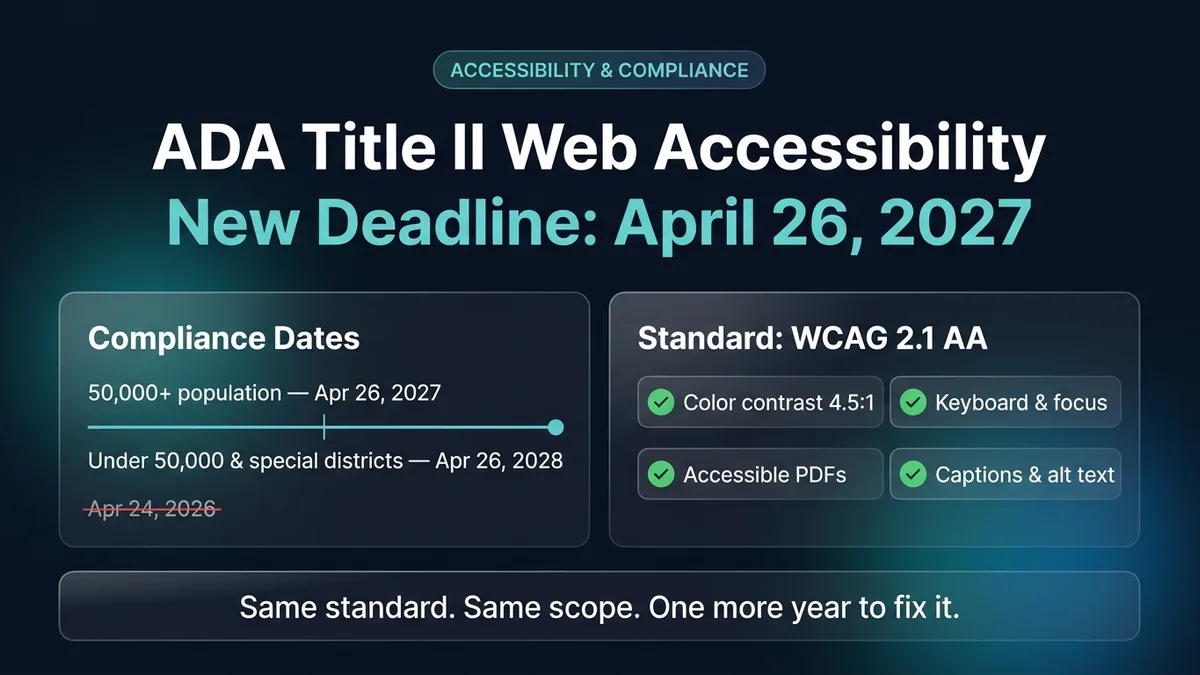
Searchers click through when accuracy and exact dates carry legal or financial risk. Our ADA Title II April 2027 deadline analysis maps exact CFR citations, population tiers, and procurement clauses into comparison tables and remediation checklists that compliance teams copy into internal planning docs.
4. Opinionated Buyer and Hiring Playbooks
Decision-makers who are about to spend money still read deep, experience-backed guides — like how to hire a full stack developer for a startup — when the article includes concrete screening questions, red-flag checklists, and real milestone structures rather than generic HR advice.
How to Audit and Prune an Existing Blog in One Afternoon
If your site already has dozens of older informational posts losing clicks to AI Overviews, run this four-step consolidation pass:
- Export 16 months of Google Search Console query + page data. Flag every article where impressions are flat/rising, CTR is below 1.5%, and conversions or assisted contact visits are zero.
- Merge overlapping tutorials into one canonical reference guide. If you have separate posts on Next.js LCP, image optimization, and technical SEO checklists, combine the strongest code examples into a single comprehensive guide and
301redirect the retired URLs to the canonical post so backlink equity consolidates. - Retire zero-gain definitional posts with permanent 301 redirects. Never delete a URL into a
404; map every retired slug innext.config.tsto the closest relevant case study, tool, or category index. - Pair every remaining article with a live proof artifact. Every technical article should link directly to a live deployed application, a reproducible code pattern, or a downloadable checklist.
Frequently Asked Questions
How much do AI Overviews reduce click-through rate?
Across 300,000 informational keywords studied by Ahrefs, the average position-one organic click-through rate dropped from 3.9% on queries without an AI Overview to 1.6% on queries with one — a 58% reduction.
Does llms.txt improve rankings in ChatGPT or Perplexity?
On its own, llms.txt is a lightweight machine-readability index rather than a ranking booster. It helps document site structure alongside sitemap.xml and JSON-LD, but real search and AI citations come from original data, live tools, and production case studies.
Should a developer portfolio or small SaaS stop writing blog posts?
Stop publishing generic definitional essays that summarize existing documentation. Keep publishing original engineering case studies, dated regulatory or benchmark analysis, and interactive tools that require a visit to use.
Want to build a high-performance Next.js product, interactive web tool, or technical SEO architecture that earns real users and conversions? Explore my live deployed projects, review my full stack development services, or get in touch to discuss your build.